
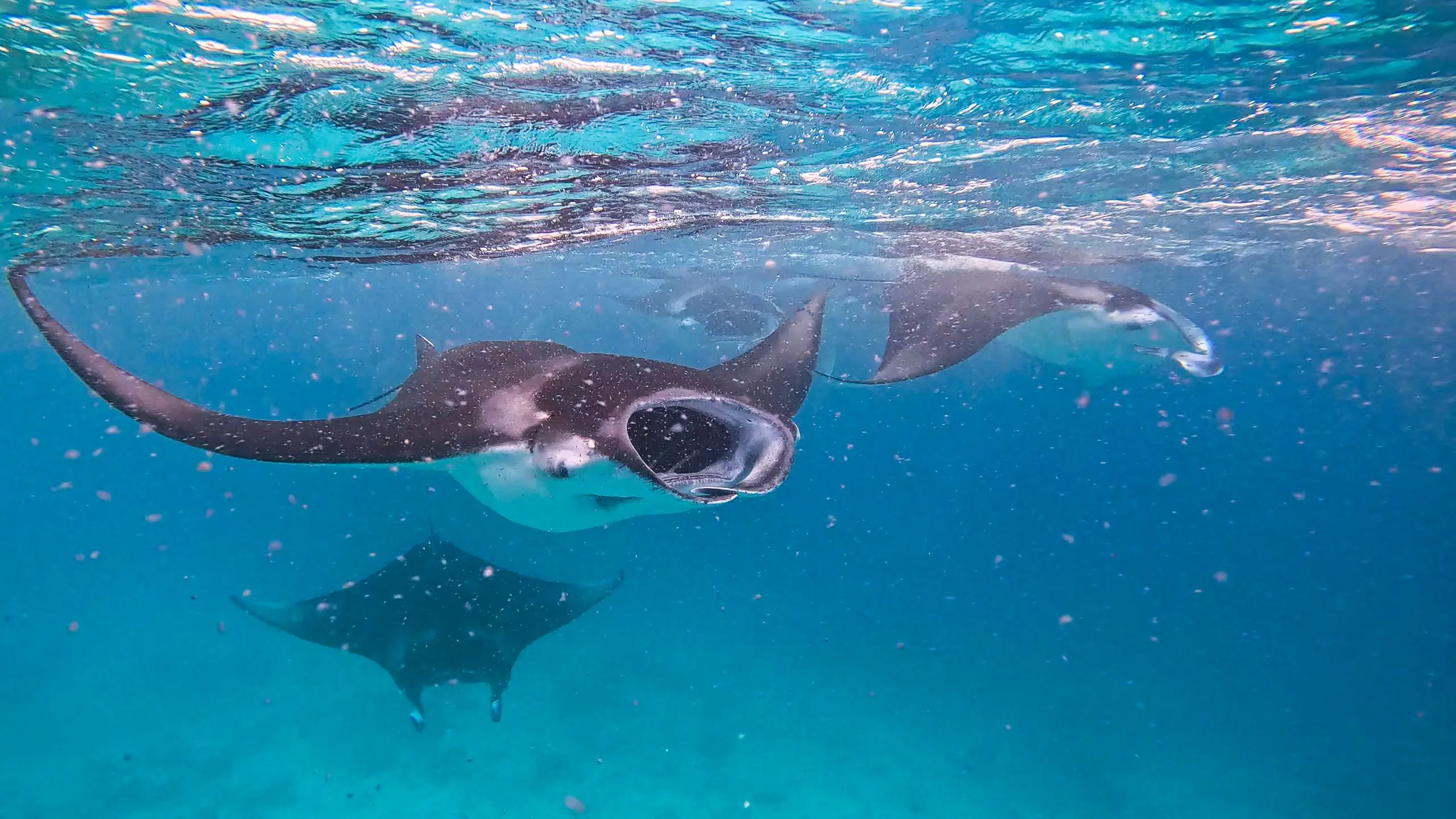
The Maldives is a top destination for snorkelling with Manta rays. This activity offers a breathtaking experience, showcasing the beauty and grace of these gentle giants.
The Unique Appeal of Manta Rays
Manta rays are among the most captivating marine species due to their graceful movements and enormous wingspans, reaching up to 7 metres. Unlike other rays, they have no barbs, making them harmless to humans. Their intelligence and curiosity often lead them to interact playfully with snorkelers, creating unforgettable encounters. Observing their feeding and social behaviours underwater is a mesmerising experience, showcasing the beauty of marine life.
Why the Maldives Is the Ideal Destination for Snorkelling with Manta Rays
The Maldives, with its warm, clear waters and rich biodiversity, is a global hotspot for manta ray encounters. Home to one of the largest populations of reef mantas, the archipelago offers prime conditions for snorkelling year-round. Hanifaru Bay, a UNESCO Biosphere Reserve, is particularly famous for its seasonal manta ray gatherings. The Maldives’ unique geography, with shallow lagoons and nutrient-rich waters, creates an ideal habitat for these majestic creatures.
Preparing For Your Adventure
Before embarking on a manta ray snorkelling adventure, it’s essential to prepare yourself and gather the necessary equipment. Begin the process with choosing the right dive centre, and booking sessions in advance. Research reputable centres near your resort, and ensure they are equipped with experienced guides who specialise in manta ray encounters while maintaining sustainable and mindful snorkelling practices. Booking excursions in advance also ensures availability, especially during peak season, when crowds of tourists seek the wonders of the Maldives beneath the waves.
Additionally, reduce the chances of external factors derailing your plans, and monitor weather forecasts, to make sure favourable conditions will be present when you plan to snorkel.
Don’t forget to check whether equipment and training will be provided by the hotel or dive centre. Although most Maldives five-star resorts offer necessary gear and guidance for beginners, bring a snorkel and fins if booking with centres that do not. Keep in mind that while you wade through the cool ocean waves over the reefs, sun protection is still essential – bring reef-safe sunscreen, as well as a hat and other sun protection when venturing to the dive site.
The Manta Hotspots
The Maldives offers several prime locations for encountering manta rays, with aggregations populated by hundreds of these aquatic “winged” creatures. Explore some of the most popular hotspots, with a quick guide to the archipelago and its Manta rays.
- South Ari Atoll (Bonus: Whale Sharks)
The South Ari Atoll is a renowned destination for manta ray encounters, home to the protected marine reef aptly named Manta Point. Embark on an excursion through the oceanic backyard of Anantara Dhigu Maldives Resort, and spot congregations of pelagic marine life gliding through the reef. In addition to manta rays, you may also have the opportunity to swim with whale sharks, the largest fish in the ocean.
- Hanifaru Bay (UNESCO World Heritage Biosphere)
Hanifaru Bay, located in the Baa Atoll, is a UNESCO World Heritage Biosphere Reserve and a popular destination for manta ray feeding aggregations. During certain months, hundreds of manta rays congregate in the bay to feed on plankton funnelled in by impressive currents. The protected marine reserve is also home to over 2000 species of fish that inhabit the coral-rich reefs and the waters below the mangroves.
- Lhaviyani Atoll
Only a short distance from Velana International Airport, the Lhaviyani Atoll is another excellent spot for manta ray snorkelling. This collection of picturesque islands, strung together by coralline beaches and reefs, offers a high chance of encountering these graceful creatures.
Best Times to Snorkel in the Maldives
The best time to snorkel in the Maldives is generally from November to April when the water is calm and the visibility is excellent. However, manta ray sightings can occur throughout the year, so it’s worth checking with local dive centres for the most up-to-date information. For instance, South Ari Atoll’s Manta Point offers the best manta sightings from April to December, while Hanifaru Bay witnesses gatherings of roughly 200 manta rays per encounter, from mid-May to December.
